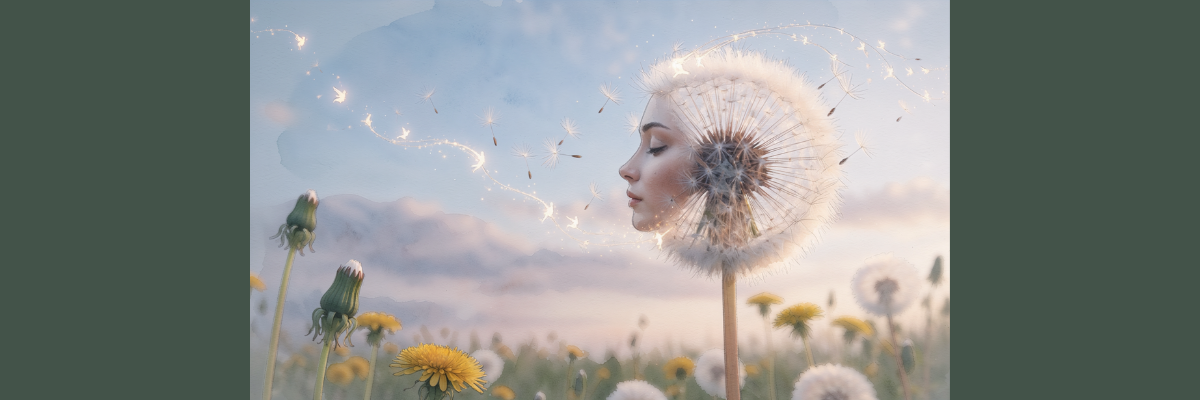
More Than Make Believe
Modern language has done mythology something of a disservice. To call something "a myth" has become shorthand for saying it is false, imaginary or easily dismissed. Yet the word itself tells a very different story. The ancient Greek mŷthos originally meant simply a spoken tale, a meaningful narrative through which profound truths were conveyed. Only much later did myth become confused with fiction. This distinction matters, especially in herbal medicine.
Stories That Remembered
For thousands of years, before scientific journals, universities and pharmacology, knowledge was carried through stories. A myth was never merely a tale told around a fire to pass the evening. It was a vessel for remembering. Hidden within its characters, landscapes and adventures were observations about human nature, the rhythms of the seasons, the behaviour of animals and importantly, the medicinal virtues of plants. The first herbalists were also storytellers.
When Plants Became Characters
Long before herbs acquired Latin names and chemical analyses, they possessed personalities. Plants were regarded not simply as biological organisms but as participants in the great drama of life. They became companions of gods, gifts from Divine beings and symbols of courage, transformation, fertility, remembrance and healing. Through these stories, a culture could remember which plants soothed grief, eased childbirth, restored strength or protected against disease. Myth became memory wrapped in poetry.
We Are Still Living Myths
Even today, we continue to think in stories. When we describe a difficult period as walking through a dark forest, or speak of turning over a new leaf, finding our roots or blossoming into ourselves, we are speaking mythically without realising it. Myth is not something that belonged only to the ancient world. It is the language the psyche naturally speaks. It continues unfolding around us every day.
The Maps Within
Few understood this more deeply than Joseph Campbell. Campbell argued that myths are not primitive attempts at science but sophisticated attempts at understanding consciousness itself. They are maps of the inner landscape. As he famously observed, myths are "public dreams", while dreams are "private myths." Both reveal enduring patterns that transcend culture and history.
This is precisely where herbalism finds one of its deepest roots.
Every Herb Has Two Stories
Every medicinal plant possesses two identities. One belongs to chemistry. The other belongs to meaning. A laboratory can identify the anti-inflammatory compounds within turmeric, the soothing mucilage of marshmallow root or the calming constituents of chamomile. These discoveries are invaluable and continue to enrich modern medicine. Yet chemistry alone cannot explain why humanity has cherished these plants for centuries, woven them into ceremonies, songs, rituals and folklore, or instinctively reached for them in moments of celebration, grief and transition. Their stories carried truths that chemistry would eventually illuminate.
Nature Speaks in Symbols
Consider willow. Across many cultures, willow became associated with mourning, flexibility and emotional endurance. It bends before the storm rather than resisting it. Long before salicin was isolated and eventually inspired aspirin, people already recognised willow as a tree that eased pain, both physical and symbolic. Its mythology and its pharmacology grew from the same attentive observation of nature.
Rosemary offers another example. Ancient scholars wore sprigs upon their heads while studying, believing the fragrant herb sharpened memory. Weddings, funerals and sacred ceremonies all employed rosemary as an emblem of remembrance and fidelity. Today we know that its aromatic compounds influence alertness and cognitive performance. Science did not invalidate the old stories. Rather, it revealed another layer of why those stories endured.
The Language of Archetypes
Throughout history, plants have become mirrors in which humanity has recognised aspects of itself. The oak embodies steadfastness. The rose teaches that beauty and vulnerability often coexist with thorns. The humble dandelion reminds us that resilience frequently masquerades as a weed. St John's Wort has long been associated with bringing light into darkness, gathered around midsummer when daylight reaches its zenith. Whether one approaches such traditions spiritually, psychologically or historically, they reveal something timeless about the human search for healing.
The Swiss psychiatrist Carl Jung described these recurring motifs as archetypes, universal patterns that arise spontaneously within the human psyche. Herbal mythology is rich with such archetypes. Plants become teachers, guardians, healers, tricksters and companions. They help us understand ourselves as much as they help restore the body.
Medicine Never Lost Its Myths
In this sense, mythology and medicine have never truly parted company.
Even modern medicine is shaped by symbols inherited from antiquity. The staff of Asclepius, entwined by a serpent, remains one of the world's enduring emblems of healing. Pharmacies, hospitals and medical colleges continue to employ symbols whose origins lie in ancient myth. We have not abandoned mythology. We simply forgot we were still speaking its language.
Healing Needs Meaning
Perhaps this explains why herbs continue to resonate so deeply despite our technological age. We do not encounter a medicinal plant as an isolated chemical factory. We meet something living. We smell its fragrance, admire its form, learn its habits and remember the stories attached to it. The plant engages our senses, our intellect and our imagination simultaneously. Story itself may even possess healing power.
Neuroscience increasingly recognises that the narratives we tell ourselves shape physiology, emotion and resilience. Meaning influences behaviour. Hope alters outcomes. Expectation changes perception. Human beings are storytelling creatures and our biology appears to respond accordingly. The ancient herbalists understood this intuitively. Healing was never only about swallowing a remedy. It involved entering a story in which restoration became possible.
Two Ways of Knowing
This does not diminish science; quite the opposite. Scientific inquiry reveals extraordinary detail about how herbs work, while mythology reminds us why they matter. One explains mechanisms. The other preserves meaning. Together they offer a fuller understanding than either could achieve alone.
The Story Continues
Perhaps that is the enduring genius of mythology. Its purpose was never to compete with facts but to illuminate them. A myth does not ask us whether every event occurred exactly as described. It asks whether the story reveals something enduring about life, suffering, transformation and our place within the living world. The old herbal legends continue to flourish because they speak to something within us that has never disappeared. Every time we brew a fragrant tea for comfort, gather flowers to celebrate a milestone, carry rosemary in remembrance or plant herbs around our homes for protection and nourishment, we are participating in an ancient conversation that has never truly ended.
The myths are still alive; they have simply changed their costume. Somewhere beneath every healing herb grows not only a root in the soil, but another reaching just as deeply into the fertile ground of the human imagination.